
Alright, let’s cut through the noise right now.
If you’re like me – someone who’s been creating content online for years – you’ve seen every “revolutionary” AI tool come and go. You’ve watched the hype cycles: the crypto pushes, the dropshipping courses, the “make 10k a month with ChatGPT” webinars that never quite deliver what they promise.
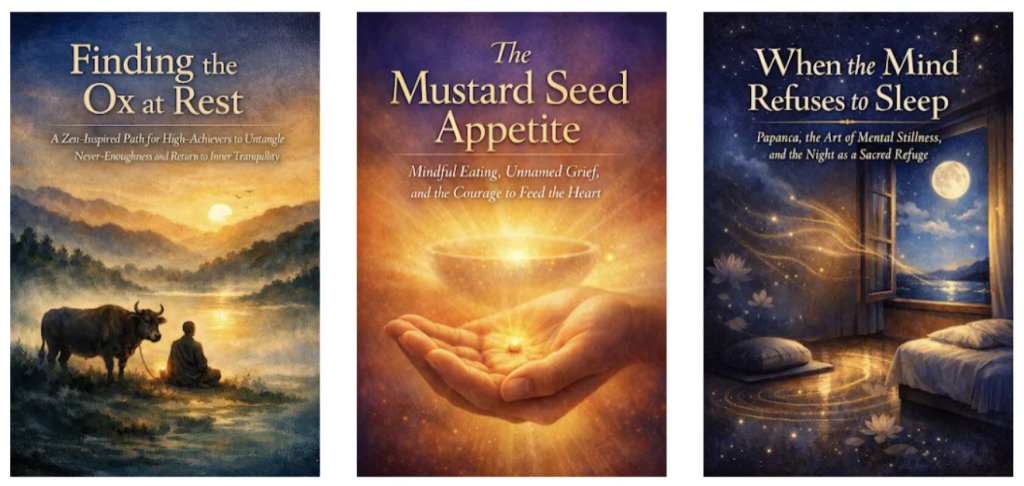
So when I stumbled across “336 Prompts for Buddhist Wisdom Books” my immediate reaction wasn’t excitement. It was a deep, weary sigh. Another prompt pack? Really? The sales page told this moving story about a Vietnamese monk in exile whose book still earns thousands monthly. The hook was that these prompts could help you create books with that same depth for $17.
My professional skepticism screamed “scam.” My curiosity – and my genuine frustration with how hard it is to create actually meaningful content in the spiritual/wellness space – whispered, “But what if?”
I bought it. Not because I believed the hype, but because $17 is what I’d waste on two overpriced coffees and at least this might give me something to analyze.
Here’s what actually happened when I stopped scrolling and started testing.
What This Thing Actually Does (Spoiler: It’s Not Magic)
First impression: It’s a Google Doc. No fancy platform, no monthly login. Just a document. In our age of broken SaaS platforms, this actually felt refreshingly honest. I could copy it, own it, and it wouldn’t disappear if the seller vanished.
I opened it. The scale hit me first: 336 prompts organized into 42 hyper-specific niches. We’re not talking “Meditation” or “Mindfulness.” We’re talking “Healing from Emotional Abuse,” “Managing a Narcissistic Partner,” “Mindfulness for First Responders,” “Overcoming High-Functioning Anxiety.”
My marketer brain perked up. Specificity sells. This wasn’t a generic tool; it was targeting real, aching pain points.
Then I opened my first “Master Prompt.” It wasn’t a one-liner. It was a massive block of text—what they call a “Dual-Structure Wisdom Engine.” Honestly, it looked intimidating. It talked about creating “Diagnosis Lenses” and “Transformation Paths.” The goal wasn’t just to generate text, but to force the AI to simulate the thinking process of a wise teacher: diagnose the core pain, then architect a healing path.
Skeptical, I copied the entire monster prompt into a fresh ChatGPT-4 chat.
What happened next wasn’t what I expected.
The AI didn’t just spit out a title. It constructed a complete book blueprint in about 60 seconds. For a book titled “The Mustard Seed Appetite: Mindful Eating, Unnamed Grief, and the Courage to Feed the Heart,” it gave me:
- A poetic, magnetic title and subtitle.
- A soul-stirring book description that actually sounded human.
- 7 spot-on SEO keywords.
- Two core frameworks: a “Diagnosis Lens” (understanding the reader’s deep pain) and a “Transformation Path” (a step-by-step healing roadmap).
- 11 follow-up prompts, pre-tailored to write the intro and each chapter of this specific book.
The “aha” moment wasn’t about the quality of the text (that came later). It was about the architecture. This prompt was engineering a process, not just an output. It was forcing structure and empathy into the AI’s workflow.
Look, if you want to skip ahead and see this blueprint-generating engine for yourself, you can check out the prompt pack right here. I think seeing the structure is worth more than me describing it. But the real test was in the messy, practical use.
The Messy Middle: Where I Fucked Up & What Actually Worked
Here’s where I build trust by telling you how I stumbled. Because I absolutely did.
Blinded by the shiny object, I ignored the instructions and went straight to a section with “Book Cover Prompts.” I pasted one into DALL-E. Got a gorgeous image… of a lotus flower in a pond. Beautiful, but completely wrong. The book blueprint I’d generated was about a mustard seed – a specific symbol from a Buddhist parable. The correct prompt, generated by the Master Prompt, explicitly asked for “a mustard seed in an open palm.”
My first lesson: This isn’t a random assortment of prompts. It’s a SYSTEM. You have to follow the sequence. Master Prompt first → get your blueprint → use the custom prompts it generates. Treat it like a recipe, not a buffet.
Once I got over myself and followed the steps, I ran the “Intro Prompt.” It generated a 1500-word introduction that wove the ancient story of Kisagotami (a woman learning about grief through a mustard seed) with modern struggles with emotional eating. It ended with a “Micro-Practice”: “Before your next meal, pause for three breaths. Place a hand on your chest. Ask, ‘What is asking for nourishment right now?'”
I read it. Then I read it again. My critic’s voice was quiet. This didn’t sound like AI. It sounded… considered. Gentle. It had a narrative flow and ended with a simple, actionable insight. Not “life-changing prose,” but solid, publishable material for the spiritual self-help niche.
The biggest value, however, came unexpectedly. It wasn’t from generating a full book.
A week later, a client – a life coach – needed a framework for a newsletter series on “creative burnout.” I was drawing blanks. Then I remembered the prompts. I dove into the “336 Prompts” doc, found the “Recovering from Burnout” category, and didn’t even run the AI. I just used the logical framework from the prompts:
- Anchor Quote (ancient wisdom)
- Storytelling Bridge (relatable parable)
- Deep Anatomy (diagnosing the root cause)
- Micro-Practice (tiny, actionable step)
I drafted three newsletters in under an hour. The client replied: “This is exactly the depth and structure I was hoping for. How did you get inside my audience’s head like that?”
The system gave me a map when I only had a blank page.
The Unvarnished Pros & Cons
Let’s be brutally honest. This isn’t for everyone.
What Actually Works (The Real Pros):
- Forces a “Wise” Voice: This is the core innovation. The prompts don’t just ask for text; they command a tone of compassionate, teacher-like empathy. It bypasses AI’s default corporate-cheese setting.
- Niche-First Precision: Creating content for “Mindfulness for ADHD Brains” is infinitely more marketable than another generic “Guide to Meditation.”
- Complete Production Pipeline: From title and SEO to cover art prompts and full chapters, it hands you a process. You’re not left wondering “what’s next?”
- “Micro-Practices” are Gold: These ending exercises are small, human, and useful—the antithesis of vague, “go find yourself” advice.
The Annoying Limitations (The Real Cons):
- It’s Manual Assembly: You are copying and pasting 10+ times per book. This is a hands-on workshop, not an automated factory.
- Garbage In, Garbage Out: Using a weak AI model (like free GPT-3.5) will give you a weak, repetitive result. You need GPT-4, Claude Opus, or equivalent for the “wisdom” effect to work.
- Analysis Paralysis Central: 336 prompts is overwhelming. You must practice ruthless focus: pick ONE niche and ignore the other 335.
- The Licensing Question Mark: The doc says “commercial use,” but my inner realist wants clearer terms if I were to publish the output verbatim on Amazon KDP. For client work, frameworks, and ideation? Perfect. For passive-income publishing? Do your own due diligence.
Pricing, Value & Who This Is Really For
It’s $17. One time.
Let’s contextualize that, because price without context is meaningless.
- A generic “10,000 ChatGPT Prompts” ebook on Gumroad: $27+
- One month of a mid-tier AI writing tool subscription: $29-$49
- One mediocre business lunch delivery: $25
The break-even for me was one client call where I used the framework logic. It paid for itself 20 times over in an hour.

Buy this if you are:
- A content creator, marketer, or coach in the wellness, spirituality, or personal growth space who needs to generate ideas, frameworks, or drafts that don’t sound hollow.
- An aspiring non-fiction author who wants a step-by-step scaffolding to draft a book. (You still must edit, voice, and publish).
- A therapist or facilitator looking for structured “Diagnosis Lens” frameworks and gentle “Micro-Practices” to adapt for clients or workshops.
Avoid this if you:
- Want a one-click, zero-effort money button. This requires thoughtful work.
- Have no interest in psychology, empathetic communication, or spiritual themes.
- Get frustrated managing documents and prefer fully automated, done-for-you solutions.
Final, No-BS Verdict
Am I using “336 Prompts for Buddhist Wisdom Books” to create a 336-book empire on Amazon? Absolutely not. That sounds like a robotic, soul-crushing nightmare.
But do I keep the Google Doc open in a tab and use it regularly? Yes.
It has become my secret weapon for depth. When I need to brainstorm a client’s email sequence, structure a workshop, or find a new angle on an overdone topic like “stress,” I open it. I don’t always use the AI. I often just steal the framework logic: diagnose the true pain, then map a path to relief.
For $17, it’s not a life-changing business. It’s a surprisingly sophisticated tool that solves a specific problem: making AI-generated content in the wisdom niche feel less robotic and more human. In a world drowning in AI fluff, that’s a rare and valuable thing.
If you’re tired of shallow AI content and need a tool to help you engineer depth, 336 Prompts for Buddhist Wisdom Books is worth examining. At the very least, it’s a masterclass in prompt engineering for empathy.
For me, it was a small investment that provided a disproportionately large return in mental frameworks. And in our line of work, the right framework is often the only thing separating forgettable content from something that actually resonates.
You might also like our roundup of the Best AI Writing Tools Here.